Enhancing Sierra Leone Energy Access Project (ESLEAP)
CLIENT: Ministry of Energy, Government of Sierra Leone
DONOR: The World Bank
CONTRIBUTION: USD 12,700,000
UNOPS SERVICES: Project Management and Infrastructure Development..
DURATION: Dec 2021 - Dec 2024
Infrastructure Development..
SECTOR: Energy
BACKGROUND AND CONTEXT
Sierra Leone has one of the lowest rates of electricity access in the world; the country has a national electrification rate of 26 percent, although this figure declines to 6 percent in rural areas where the majority of the population lives. There are a number of barriers to expanding grid-based electricity access and improving service quality, including a weak and limited transmission and distribution system; non-technical deficiencies with the utility, which result in high technical and commercial losses; insufficient generation capacity; seasonal variability in hydropower production; and institutional and regulatory constraints.
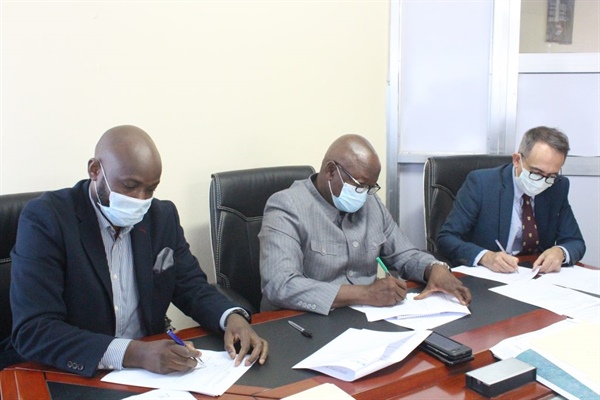
Furthermore, a large portion of small towns and rural communities of the country are not likely to be connected to the main grid for at least ten years. Hence, the Government of Sierra Leone is increasing its effort on access to electricity . UNOPS through the Ministry of Energy (MoE) signed an agreement with the World Bank to implement a $12.7m project with the aim to increase rural electricity access through mini-grids and standalone home systems in Sierra Leone. The mini-grid option provides a cost-effective solution for small towns, large communities and settlements.
Objectives
The objective of this project is to increase energy access in Sierra Leone by electrification through mini-grids targeting communities with productive use potential, and stand alone solar systems aimed at electrifying schools and hospitals across the country.
Expected Benefits
A total of 2.8 MW of solar power system capacity (Moyamba: 0.85 Mw; other 9 mini-grids: 0.5 Mw; 500 schools: 1Mw; 200 health facilities: 0.4 Mw) is expected to be installed and it is expected to benefit about 3,000 households and 350 industrial and commercial businesses, 200 health facilities and 500 schools which are not going to be electrified through grid extension in the next five years. Libraries of about 50 selected schools will be provided with solar lanterns.
Project Outputs and Activities
The project will facilitate the implementation of renewable energy through power generation and distribution. Key objectives with activities of the project will include:
- installation of mini grids with storage capacity
- Moyamba Power Generation Assets – A detailed technical and financial analysis has been carried out to determine the sizes of the solar PV (Photovoltaic) capacity and battery storage capacity needed. The proposed size for the Moyamba power generation assets is 0.85Mw solar Mini-grid with 1,800 kwh battery backup.
- Other Community Mini-grids -This subcomponent will include the installation of generation capacity and distribution networks of 0.5Mw in 9 communities (Dodo Kortuma, Baiwalla in Kailahun District, Mandu, Gbaima Songa in Bo District, Kukuna in Kambia District, Manjoroh, Karina Town in Bombali District, Gbentu in Falaba District, Fogbo in Western Area Rural).
- Installation of solar PV systems for the health facilities and schools
- Health Facilities – The aim is to install solar PV systems for approximately 200 health facilities with a capacity of 0.4Mw each. These are health facilities which are not going to be electrified through grid extension in the next five years.
- Schools – Activities under the sub-component will aim to install solar PV systems for about 500 schools each with a capacity of 1Mw. These schools are schools which are not going to be electrified through grid extension in the next five years.
- Provision of TA for market assessment, capacity building, result monitoring and evaluation (M&E)
- Market Assessment – The project will conduct a market assessment and affordability analyses of productive uses in rural Sierra Leone
- Results Monitoring – A market assessment and affordability analyses of productive uses in rural Sierra Leone will be conducted. Lessons learned will be documented and shared with key stakeholders. MoE’s existing M&E system will be further strengthened, to track and monitor progress against the targets
- Awareness Raising – Communities will be engaged to sensitize them on upcoming projects, the need to pay for electricity supplies, tariff structures, complaint mechanisms, safeguarding issues; and raise their awareness and understanding of energy access
- Capacity Building – Capacity building activities will be implemented to strengthen business management skills among rural and urban business communities, including women-led businesses; and the private sector.
Partnerships and Sustainability
.The project will contribute to the Government’s goals for sustainable development and adaptation to climate change by utilising multiple sustainability initiatives. Drawing from experience elsewhere, private sector-driven mini-grids are considered to provide the highest chances for success. The mini-grid sites are poised to be hubs of new and improved economic activities generating better employment opportunities and incomes, fostering greater social and economic welfare for communities, leading to developmental outcomes in health, education, women’s empowerment, and overall poverty reduction.
Documents to download
ENVIRONMENTAL AND SOCIAL COMMITMENT PLAN (ESCP)
November 2, 2022
ESLEAP FACT SHEET
May 29, 2013
ESLEAP OVERVIEW
May 29, 2023
Frequently Asked Questions
May 29, 2023
STAKEHOLDER ENGAGEMENT PLAN
November 2, 2022
Stakeholder Engagement Plan_Rev_PIT1
May 29, 2023