On Wednesday, October 14, 2026, the Ministry of Energy announced that its crackdown on electricity theft will be a continuous exercise, warning consumers against illegal connections, meter bypassing and interference with electricity meters.
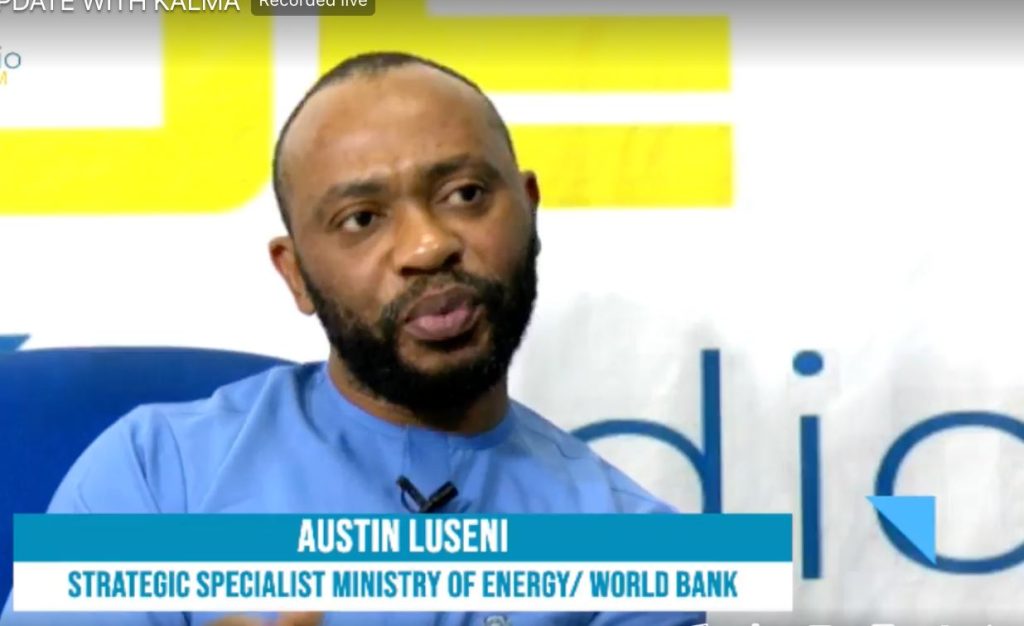
The ministry’s Communications Specialist, Austin Luseni, said the enforcement exercise, which he indicated began on October 8, 2026, would not be limited to a specific period, as the government seeks to improve revenue collection and ensure the payment of Independent Power Producers (IPPs).
Speaking during a radio interview, Luseni said the operation would target electricity users across the country, including households, hotels, restaurants and other businesses, irrespective of their size or status.
He explained that electricity theft undermines revenue collection at the Electricity Distribution and Supply Authority (EDSA), making it difficult for the utility to meet its financial obligations, including payments to independent power suppliers.
According to him, improved revenue collection is necessary to sustain electricity supply, pay staff and support the continued operation of the electricity sector.
Luseni said the task force would work alongside the police and other relevant security personnel to identify illegal connections and ensure compliance with electricity regulations. He urged consumers with unauthorised connections or bypassed meters to regularise their status rather than wait for enforcement teams to discover the violations.
He also warned that consumers found guilty of electricity theft could face energy recovery charges and other legal penalties. He cited provisions he attributed to the 2011 electricity law, including recovery of charges for periods of up to two years and possible imprisonment. The applicable provisions and penalties could not be independently verified from the interview.
EDSA Reports Significant Electricity Losses
The communications specialist estimated that EDSA loses between 40 and 50 per cent of electricity through a combination of technical and commercial losses.
He explained that technical losses occur during the transmission and distribution of electricity, while commercial losses include electricity consumed through illegal connections and meter bypassing.
Luseni noted that electricity theft was not the only challenge affecting the utility, pointing to infrastructure limitations and losses along transmission corridors as additional factors contributing to the problem.
He maintained that reducing commercial losses would help improve the utility’s ability to collect revenue and meet its obligations to power suppliers.
Public Concerns Over Tariffs, Metering and Power Supply
The interview also addressed concerns raised by consumers over electricity tariffs, prepaid meter charges, the number of units received after purchasing tokens, and prolonged power outages in some communities.
Responding to calls for a transparent review of electricity charges and meter fees, Luseni maintained that Sierra Leone has one of the lowest electricity tariffs in the sub-region, partly due to government subsidies for electricity supplied through rural mini-grids.
He encouraged consumers to examine the applicable charges and tariffs, explaining that the amount paid for electricity tokens may include other charges in addition to the cost of electricity consumption.
On complaints about meter bypassing and possible collusion involving electricity personnel, Luseni acknowledged that allegations of misconduct needed to be investigated. He said staff found to have facilitated illegal connections or interfered with meters could face disciplinary action, including termination.
He rejected suggestions that influential individuals or large businesses would routinely be exempted from enforcement, insisting that the exercise was intended to apply to all electricity users.
The official also cautioned against connecting several households to a single meter through informal wiring arrangements, warning that substandard cables and unsafe connections could increase the risk of electrical faults and fires. He encouraged households to obtain appropriate meters and use qualified electrical technicians.
Addressing complaints about damaged appliances and unstable electricity supply, Luseni said some incidents could be linked to poor wiring and substandard electrical materials. He acknowledged that power quality concerns existed but maintained that individual cases required proper investigation to establish their causes.
Supply Challenges and Planned Energy Projects
Luseni acknowledged that electricity supply remained a challenge in some communities, including Grafton, where population growth and expanding settlements have increased demand on existing infrastructure.
He said transformer capacity and other technical faults could contribute to outages, noting that a new transformer had been installed in the Grafton area towards the Janneh Gas Station and police barracks.
He also cited the completed one-megawatt solar project in Moyamba, explaining that EDSA had provided free meters in some communities to support connections. However, he acknowledged that metering and connection challenges remained in some areas.
Looking ahead, Luseni pointed to several ongoing and planned energy projects, including the Regional Emergency Solar Power Intervention Project (RESPITE), solar generation with battery storage, transmission infrastructure and other renewable energy developments.
He said these projects were expected to improve electricity supply and ease pressure on the national grid as additional generation capacity and infrastructure become available.
Luseni expressed optimism that the projects would significantly reduce electricity supply challenges from 2027 onwards, although the expected improvements would depend on project implementation and the availability of additional capacity.
He further cited the government’s electricity subsidy commitments as evidence of the financial pressure associated with maintaining power supply, referring to a figure of US$20 million per month. The amount was not independently verified during the interview.
Call for Compliance
Concluding the interview, Luseni urged consumers to comply with electricity regulations, pay for their consumption and report suspected misconduct involving enforcement personnel.
He stressed that the crackdown was intended to improve compliance and revenue collection rather than serve as a short-term campaign.
He maintained that sustained revenue collection would help EDSA meet its obligations to power suppliers and support more reliable electricity services for consumers across the country.